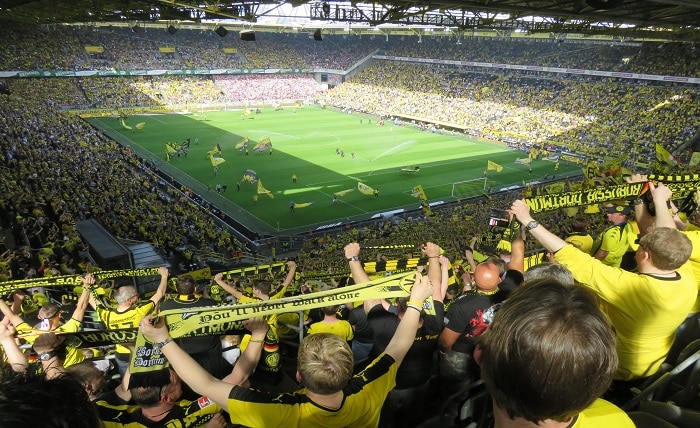
The 2008-09 German Bundesliga season stands as one of the most volatile and statistically peculiar domestic campaigns in modern European football history. Characterized by the unexpected coronation of Felix Magath’s VfL Wolfsburg, the collapse of defensive metrics across the league, and the tactical vulnerability of perennial powerhouses like Bayern Munich under Jürgen Klinsmann, the campaign shredded standard handicapping models. Assessing the season through a value-based perspective reveals how traditional market sentiment systematically mispriced newly promoted dynamics, defensive fragility, and transitional attacking systems, leaving distinct blueprints for spotting pricing inefficiencies across high-scoring domestic leagues.
Structural League Dynamism and the Breakdown of Traditional Pricing Models
Historical betting models prior to August 2008 regularly treated the Bundesliga as a tier-structured league where home favorites sustained dependable low-margin coverage rates. That premise disintegrated early in the 2008-09 cycle as an economy-wide surge in counter-pressing and transitional velocity overwhelmed static defensive units. Total goals reached historic heights, forcing sportsbooks to continually elevate their baseline over/under totals from the customary 2.5 benchmark toward 2.75 and 3.0 lines. Bettors relying strictly on five-year regression averages routinely missed the structural changes in how German squads deployed offensive fullbacks, which widened pitch spacing and exposed center-backs in isolation.
This structural shift meant that pre-match handicap lines failed to properly weigh the volatility inherent in chaotic end-to-end games. When mid-tier teams showed no willingness to play for low-block stalemates, standard minus-handicap positions on top-tier clubs lost their expected mathematical buffer. Instead of grinding out controlled 1-0 or 2-0 victories, traditional giants repeatedly became ensnared in high-variance shootouts that favored underdog spread lines.
VfL Wolfsburg and the Mathematical Emergence of Sustained Home Dominance
Felix Magath constructed a team built on relentless physical conditioning, direct vertical passing, and the lethal strike tandem of Grafite and Edin Džeko, supported by the playmaking vision of Zvjezdan Misimović. While pre-season futures markets offered little respect to the lower Saxony club, their internal dynamic transformed the Volkswagen Arena into an impenetrable fortress. Wolfsburg won 16 of their 17 home fixtures, tying an all-time Bundesliga record, while producing scoring outputs that consistently outstripped oddsmakers’ handicap expectations.
A severe market inefficiency persisted well into the spring because bookmakers resisted adjusting Wolfsburg’s home implied win probabilities above 60–65% until the final matchdays. The market routinely priced them as standard upper-mid-table finishers rather than an elite domestic unit generating high expected goals. Bettors identifying the discrepancy between Wolfsburg’s explosive attacking output and their conservative public valuation enjoyed one of the highest positive return-on-investment runs of the decade on straight win and Asian handicap coverage.
The Volatility Index of the 2008-09 Upper Table
Evaluating overall market performance requires mapping how well the top clubs satisfied spread expectations compared to their overall final table positioning. A high finishing position did not necessarily translate into betting solvency due to public money inflating favorite margins.
| Club | Final Position | Goal Difference | Spread Coverage Tendency | Dominant Total Dynamic |
| VfL Wolfsburg | 1st | +46 | Highly Profitable (Home) | Consistent Over 2.5 / Over 3.5 |
| Bayern Munich | 2nd | +29 | Poor (Negative Yield) | Highly Volatile Totals |
| VfB Stuttgart | 3rd | +20 | Profitable (Second Half) | Over 2.5 in Away Fixtures |
| Hertha BSC | 4th | +7 | Extremely Profitable Underdog | Regular Under 2.5 Winner |
| Hamburger SV | 5th | +4 | Moderate / Near Par | Narrow Margin Deciders |
| 1899 Hoffenheim | 7th | +14 | Highly Profitable (Rounds 1–17) | Early Season Over Anomaly |
The comparative data underscores how disconnected league positions were from betting value. While Bayern Munich finished as runners-up on points, their inflated market spreads consistently bled value across all handicap markets. Conversely, clubs like Hertha BSC engineered an extraordinarily efficient campaign by grinding out low-margin results that outpaced public perception, while Wolfsburg matched their title-winning trajectory with elite home betting cover rates.
The Two Halves of TSG 1899 Hoffenheim: From Pricing Phenomenon to Market Trap
Ralf Rangnick’s newly promoted TSG 1899 Hoffenheim offered a classic case study in early-season market mispricing followed by catastrophic public overreaction. Operating with Vedad Ibišević, Demba Ba, and Chinedu Obasi in an ultra-aggressive 4-3-3 pressing framework, Hoffenheim caught the entire division unprepared. During the first seventeen rounds, oddsmakers treated them as standard lower-tier newcomers, offering plus-money moneyline odds and generous positive handicaps against established clubs.
The Tactical Mechanics of Hoffenheim’s Decline
The shift from prime value play to betting liability occurred precisely when key personal losses combined with tactical counter-adjustments across the league.
- An anterior cruciate ligament tear suffered by Ibišević during the winter break stripped the squad of their most clinical finisher, who had posted 18 goals in 17 matches.
- Opponents ceased pressing upward against Rangnick’s midfield, choosing instead to drop their defensive lines ten yards deeper to eliminate the vertical running channels behind their fullbacks.
- Opposing managers began attacking the vacated spaces behind Hoffenheim’s rampaging fullbacks Andreas Beck and Fabian Johnson, transforming Hoffenheim’s former transition strength into a defensive liability.
Once the public recognized Hoffenheim as the winter champions, odds contracted aggressively, turning them into heavy favorites right at the moment their underlying tactical and physical structure degraded. Backing them in the spring became a consistently negative-value proposition.
The Bayern Munich Disconnect: Brand Premium Against Tactical Fragility
Bayern Munich entered the 2008-09 season bearing their traditional market tax, a systemic bias where oddsmakers depress payouts on popular global clubs because casual betting volume arrives on them regardless of the line. Under Jürgen Klinsmann, however, the Bavarian side completely lacked defensive cohesion. While Franck Ribéry and Luca Toni retained the individual brilliance required to unlock deep defenses, Bayern conceded 42 league goals, their worst defensive showing in over a decade.
When wagering conditions require sharp selectivity over blind public backing, assessing the real-time adjustments of modern interfaces becomes paramount; evaluating market corrections on a web-based service such as ufabet clarifies how historical favorite pricing often failed to account for Klinsmann’s tactical disconnect. Sharp handicappers repeatedly extracted value by fading Bayern on Asian handicaps, particularly in away fixtures where host clubs capitalized on Bayern’s fragmented defensive transitions without facing the traditional fear factor.
Hertha BSC and the Unsustainable Under-Model Anomaly
Lucien Favre’s Hertha BSC presented the inverse of the league’s dominant tactical high-scoring narrative. Finishing in fourth place despite a meager goal difference of +7, Hertha relied on extreme defensive pragmatism, low possession metrics, and ruthless conversion by striker Marko Pantelić and midfielder Cicero. In a league that prioritized offensive volume, Favre organized two rigid banks of four that restricted high-probability concessions.
This statistical anomaly produced profound market utility. Bettors who identified that Hertha actively suppressed variance could consistently back the “Under” on total goal lines that had been inflated by broader league-wide scoring trends. Furthermore, Hertha repeatedly covered plus-handicap spreads against top-six opponents because their deep-lying shape neutralised the transitional attacks favored by opponents that year. While their underlying numbers pointed toward long-term regression, they provided exceptional situational profits across the 34-game sample.
Defensive Insolvency as an Actionable Signal: The Relegation Landscape
The lower end of the table demonstrated how poor defensive recruitment and tactical dogmatism routinely created guaranteed fade targets. Both Karlsruher SC and Arminia Bielefeld failed to adapt to the speed of wide attacks, consistently failing to defend counter-pressing transitions and dead-ball deliveries. Where mid-tier sides managed to offset their defensive leakiness through high shot volumes, the bottom clubs suffered systematic collapses that sportsbooks struggled to price accurately on negative alternate handicap spreads.
Whenever a structural mismatch between a sluggish backline and a high-tempo transition side occurs, examining specialized lines across an online betting site like casino online highlights the utility of tracking alternate goal totals rather than standard match results. In 2008-09, backing over-totals or multi-goal margins against Bielefeld and Karlsruhe generated steady yields because their defensive personnel were fundamentally incapable of holding leads or maintaining structural discipline when trailing after the 60th minute.
Tactical Lessons for Value-Based League Assessment
The 2008-09 Bundesliga demonstrates that macro-level tactical transformations create lucrative pricing inefficiencies long before oddsmaking algorithms adjust. Bettors who evaluated games through traditional historical prestige consistently lost money on Bayern Munich and Werder Bremen, both of whom suffered from chronic structural defensive leaks that destroyed their handicap covers. Conversely, treating tactical alignment, pressing resistance, and home-field intensity as primary analytical variables revealed significant value in Wolfsburg’s home fixtures and Hertha’s variance-suppression setups.
Realized betting edge in domestic leagues rarely comes from correctly guessing winners; it comes from identifying the lag between an evolving on-pitch reality and a public market still reliant on outdated historical reputations.
Summary
The 2008-09 Bundesliga season established that public reputation frequently distorts market lines to the detriment of casual bettors while creating elite opportunities for value-focused analysis. VfL Wolfsburg proved that sustained physical intensity and transitional dominance could yield historic home-field profitability, while TSG 1899 Hoffenheim exemplified how quickly tactical exhaustion and key injuries can flip a market darling into an expensive trap. Meanwhile, Bayern Munich’s tactical disorganization highlighted the persistent danger of paying a historical brand premium on fragile favorites. Ultimately, the season demonstrated that isolating tactical discrepancies, structural defensive vulnerabilities, and algorithmic lag will always provide a far sharper betting edge than relying on legacy league status.